What Are The Business Benefits of a Skills Inventory?

Updated: March 12, 2026
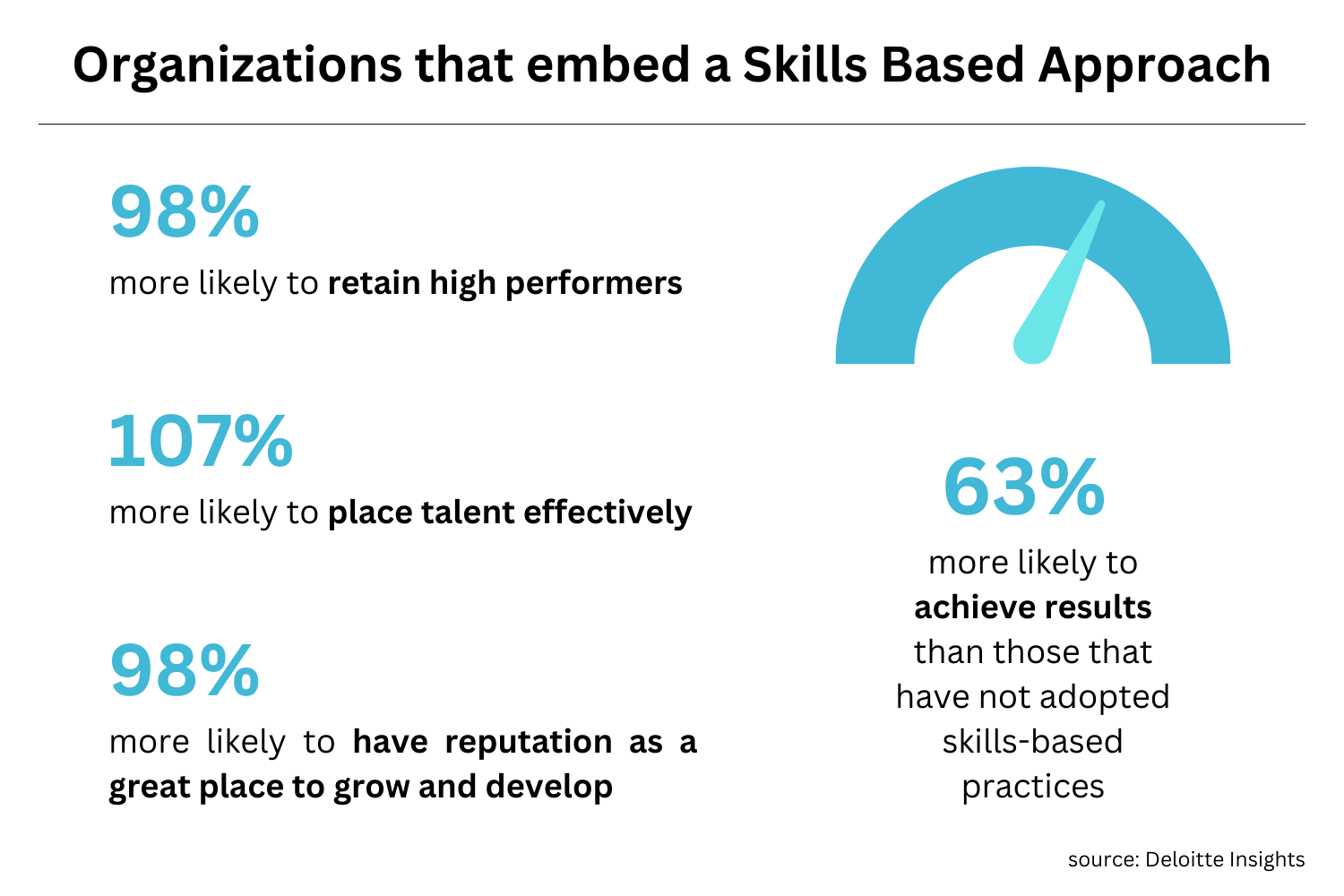
As we navigate the complexities of 2026, the global talent landscape has shifted from "digital transformation" to "AI integration and skills agility." The gap isn't just widening; it’s morphing. Recent data shows that 92% of executives now prioritize skills-based agility over traditional job titles. Yet, according to Deloitte, only 18% of organizations believe they are truly utilizing their workforce's full potential.
In an era where "skills half-life" is shorter than ever, staying competitive requires more than a static spreadsheet. It requires a sophisticated approach to talent.
The 7 Levels of Skills Maturity
To understand where your organization stands, we measure progress against our 7-Level Skills-First Maturity Model. Most organizations find themselves stuck at Level 2 or 3; the goal is to reach "Skills Intelligence" and "Targeted Development" — where workforce data starts driving decisions.
Level 1 — Skills Language: The Framework
You have a skills taxonomy, but does the whole organization speak the same language? At this level, skills carry descriptions, link to external standards (Lightcast, ESCO), and are tagged to reflect what actually matters strategically. Without a shared vocabulary, everything above this is built on sand.
Level 2 — Skills Visibility: I Know What We Have
You can see the real skills profile of your workforce — not just what's on résumés. Employees and managers have inventoried skills with proficiency data. The question shifts from "what do we think we have?" to "what do we actually have?"
Level 3 — Skills Gaps: Risk Identification
Skills are mapped to role requirements. You can see — plan by plan, person by person — where the gaps are between what the role needs and what the person has today. This is where the exposure becomes visible, and where risk-based decisions can start.
Level 4 — Talent Mobility: Agility
Talent is no longer trapped in silos. Every person has a match score against every role, and internal candidates surface automatically when a position opens. Career aspirations are tracked. The organization stops filling positions through guesswork and starts filling them from a live, scored internal pipeline.
Level 5 — Succession Readiness: Resilience
You know your single points of failure before they become crises. Every critical role has a bench depth score. The organization is protected from the Bus Factor — key-person departures are anticipated, not absorbed reactively.
Level 6 — Skills Intelligence: Strategic Planning
The platform is producing longitudinal intelligence, not snapshots. Dual-assessed skills data (self + manager) trends over multiple periods reveal whether gaps are closing or widening. Strategic skill tags connect the workforce profile to the org's actual priorities. You see trends before they become crises.
Level 7 — Targeted Development: Proving the ROI
Development is no longer a cost center — it's a measurable investment. Every employee has targeted development goals tied to their skills gaps. Achievement rates, development hours, and cost-per-employee data close the loop: you can demonstrate that the right people are being developed, and that the investment is working.
Why a Skills Inventory is Your Strategic North Star
A skills inventory is no longer just a "database." At a Maturity Level 5+, it is a dynamic talent intelligence engine. It maps the DNA of your workforce—certifications, soft skills, technical proficiencies, and latent potential.
Key Strategic Advantages:
Precision Talent Allocation: Stop "guessing" who should lead a project. Match the specific $S_{req}$ (skill requirements) with $S_{avail}$ (available talent) to maximize ROI.
M&A Synergies: McKinsey research shows that companies with detailed skills inventories are 2.3 times more likely to achieve targeted post-merger synergies. You can identify "hidden gems" in the acquired workforce before they churn.
Gen-Z Retention: 72% of Gen-Z and Gen-Alpha employees report they will leave an organization within 12 months if they lack a transparent, skills-based career path. A skills inventory makes the "next step" visible and touchable.
Best Practices for 2026
To move from Skills Visibility to Executing, follow these best practices:
Move Beyond Self-Reporting: Manual surveys are biased and age quickly. Use a Visual Workforce to infer skills and confirm reliable details you can trust for succession, internal mobility, workforce planning and L&D.
Standardize with an Open Taxonomy: Don't build in a silo. Use a standardized skills library (like Lightcast or ESCO) to ensure your data speaks the same language as the external labor market.
Focus on "Adjacent" Skills: A Level 6 organization knows that a Python developer is only one step away from becoming an AI prompt engineer. Map the distances between skills to facilitate easier upskilling.
The "Skills Currency" Approach: Treat skills as a liquid asset. Reward employees not just for their output, but for the growth of their skill profile.
Conclusion: From Planning to Execution
In 2024, we asked, "What is our workforce doing?" In 2026, the question is, "What is our workforce capable of doing tomorrow?"
A skills inventory is the bridge between those two questions. By moving up the Skills Maturity Model, you transition from reactive hiring to proactive talent orchestration. You don't just fill gaps; you anticipate them.
Are you ready?
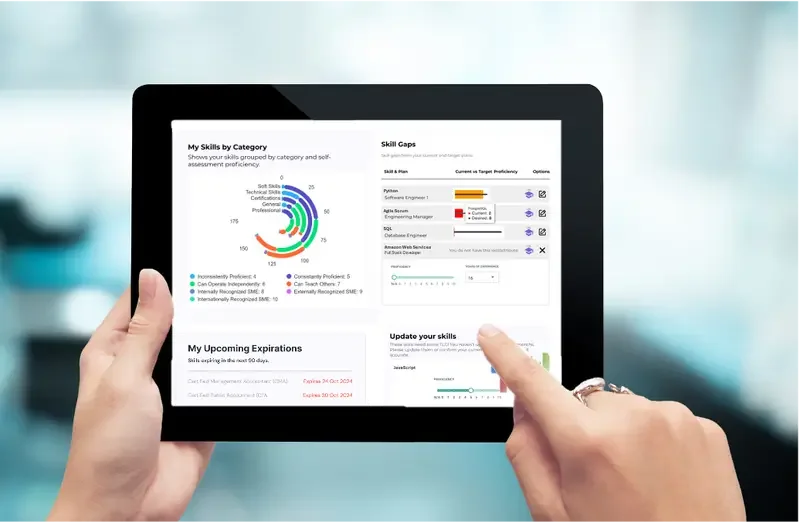
Ready to invest in the future of your workforce?
Learn how Visual Workforce can help you discover and optimize the skills and capabilities of your people, teams, and projects. Gain the talent insights you and your employees need.